
OCULOPLASTIC & EYELID

Ptosis Repair in Huddersfield

Drooping Eyelid Correction Surgery

Specialist surgical correction of upper eyelid ptosis at The Eye Doctor clinic in Huddersfield. Restore your visual field, improve symmetry, and eliminate the tired appearance caused by a drooping eyelid — led by a consultant oculoplastic surgeon.

45–90 minProcedure time per eyelid
LocalAnaesthetic — comfortable, no needles in most cases
7–14 daysReturn to normal activities
Day CaseHome the same day
★★★★★4.9 · Google Reviews

Affiliations & As Seen In

University of HuddersfieldAcademic Affiliation
The Royal College of Ophthalmologists
British Journal of Ophthalmology
UKISCRS
Journal of Cataract & Refractive Surgery
European Journal of Ophthalmology
BBC
The Yorkshire Post
Yorkshire Live
Asian Express
University of HuddersfieldAcademic Affiliation
The Royal College of Ophthalmologists
British Journal of Ophthalmology
UKISCRS
Journal of Cataract & Refractive Surgery
European Journal of Ophthalmology
BBC
The Yorkshire Post
Yorkshire Live
Asian Express

Read About Our Happy Patients

I saw Professor Jeeva today for a consultation regarding lower blephoroplasty. I was made very welcome and put at ease. The procedure was explained to me and I was encouraged to ask as many questions I wanted. I wasn't made to feel rushed or pressured into anything and left feeling that if I do decide to proceed I will be in safe hands.

Alison Smith

My mum Maureen Astles had a Zoom consultation with Mr Jeeva this morning. What a lovely surgeon he was helpful informative and such a nice smile putting her totally at ease. She is now looking forward to meeting him in person for surgery as she knows she will be in the best hands for a successful outcome.

Catherine Astles

I would like to extend my heartfelt thanks to Mr Jeeva, my surgeon and all the doctors and staff at the centre. The care I received from start to finish was exceptional. I felt at ease and was reassured throughout the procedure, feeling safe the entire time. I cannot thank you enough and will definitely be recommending your services to family and friends.

Denise Douthwaite

What Is Ptosis?

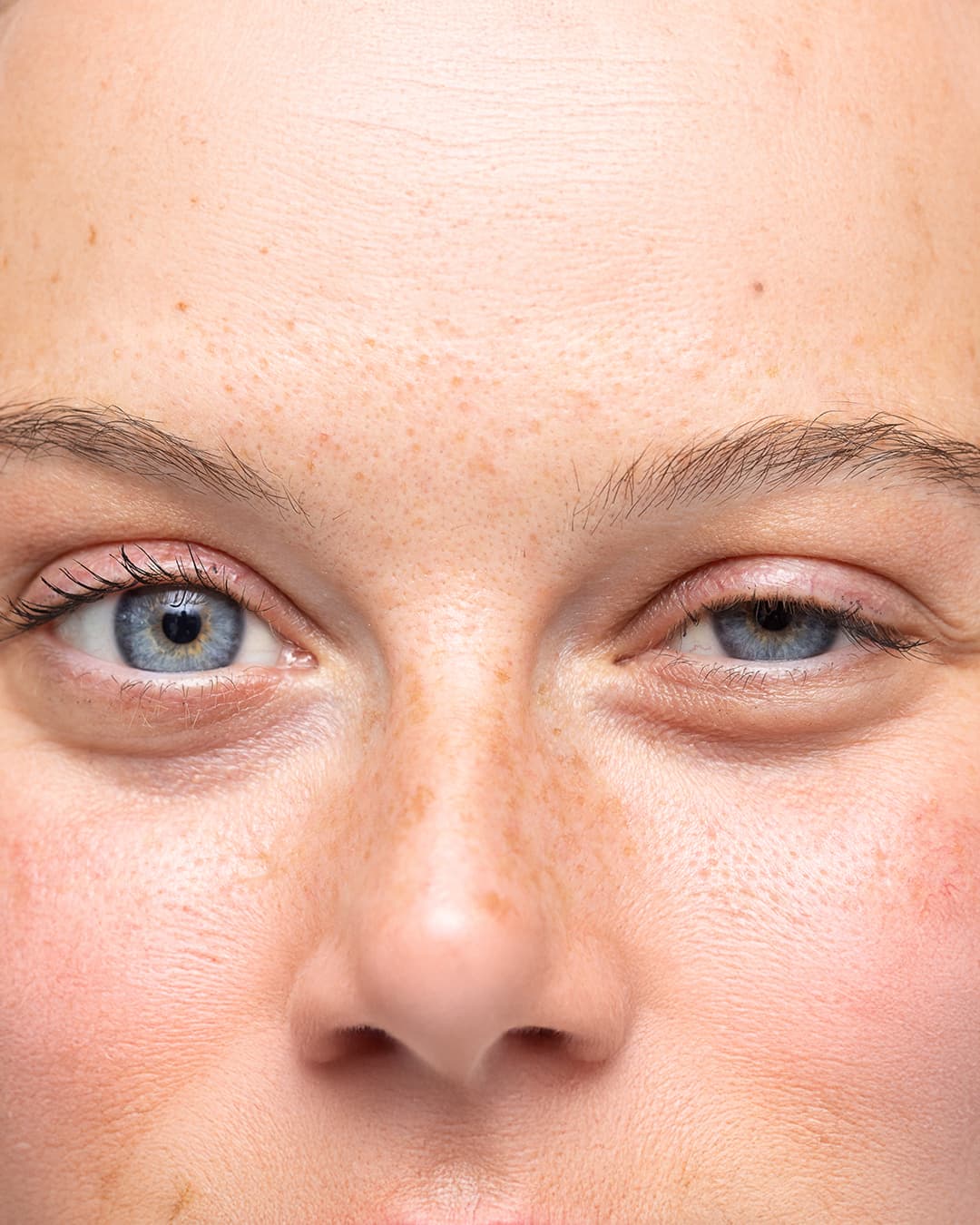
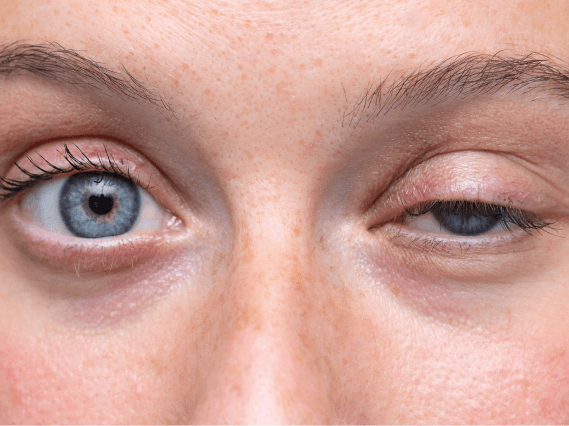
Ptosis is the medical term for drooping of the upper eyelid, caused by weakness or dehiscence of the levator palpebrae superioris, the primary muscle responsible for lifting the lid. It may affect one or both eyes, and ranges from a barely noticeable asymmetry to a lid that partially covers the pupil and obstructs vision.

In adults, the most common cause is aponeurotic ptosis — age-related stretching or detachment of the levator aponeurosis (the tendon connecting the muscle to the lid margin). This may be accelerated by prolonged contact lens wear. Less common causes include congenital ptosis, myasthenia gravis, third nerve palsy, Horner's syndrome, and trauma.

A thorough specialist assessment is essential before surgery to identify the cause, measure levator function, and exclude neurological or systemic conditions that may require investigation or treatment alongside ptosis repair.

Ptosis Repair at a Glance

  • Procedure time: 45–90 minutes per eyelid
  • Anaesthesia: Local anaesthetic (GA available)
  • Recovery: 7–14 days to normal activities
  • Sutures removed: 7–10 days post-surgery
  • Results: Long-lasting, often permanent
  • Surgeon: Consultant oculoplastic specialist

Why Choose Specialist Ptosis Repair?

Functional and Cosmetic Benefit

Ptosis repair restores both your visual field — which may be significantly impaired by a drooping lid — and your facial symmetry, eliminating the tired or sleepy appearance ptosis creates.

Precision Intraoperative Adjustment

Levator advancement is often performed under local anaesthetic, allowing the surgeon to adjust the lid height whilst you are awake — ensuring optimal symmetry and the correct final position before closure.

Long-Lasting Results

Surgical ptosis repair provides durable correction. In most patients the improvement is permanent, with recurrence uncommon following a well-executed levator advancement procedure.

Who Is Suitable for Ptosis Repair?

You may be a candidate for ptosis repair if you have:

Upper eyelid drooping affecting one or both eyes
Lid height limiting your field of vision — especially the upper visual field
Fatigue or forehead ache from raising the brows to compensate for drooping lids
Asymmetry between the two upper eyelids causing self-consciousness
Confirmed aponeurotic, myogenic, or congenital ptosis following specialist assessment
Stable systemic health, or managed systemic conditions associated with ptosis (myasthenia gravis, Horner's syndrome)

Suitability is confirmed through a comprehensive clinical assessment including measurement of levator function, lid height, and Bell's phenomenon.

What to Expect

Ptosis repair is a carefully planned day-case procedure performed by our specialist oculoplastic surgeon at The Eye Doctor.

Initial Consultation
Clinical Assessment

Measurement of the margin-to-reflex distance (MRD1), levator function, and palpebral aperture in both eyes. Assessment of Bell's phenomenon and corneal sensation. Photographs taken for surgical planning and documentation.

Cause Investigation

Where a neurological or systemic cause is suspected — such as Horner's syndrome, third nerve palsy, or myasthenia gravis — appropriate investigations are arranged before surgery is planned.

Choosing the Correct Procedure
Levator Advancement

The most commonly performed operation for aponeurotic ptosis. The levator aponeurosis is identified through a skin incision within the eyelid crease, tightened, and re-attached to the tarsal plate at the correct height.

Mullerectomy (Posterior Approach)

Appropriate for mild ptosis with excellent levator function. A measured amount of the Muller's muscle and conjunctiva is removed from the back surface of the lid, elevating it without a visible skin incision.

Frontalis Sling

Used for severe ptosis with poor or absent levator function — most commonly in congenital ptosis. The lid is suspended from the brow muscle using a silicone rod or strip of autologous fascia lata.

The Procedure
Anaesthesia

Local anaesthetic drops and a small injection numb the eyelid completely. For levator advancement, the procedure is typically performed with the patient awake — this allows the surgeon to ask you to open your eyes during surgery to precisely assess the height and contour of the lid before closing the wound.

Procedure

An incision is made within the natural eyelid crease. The levator aponeurosis is identified, dissected free, and advanced or re-attached to achieve the target lid height. Adjustable sutures allow fine-tuning intraoperatively.

Closure

The wound is closed with fine sutures within the eyelid crease. The procedure typically takes 45 to 90 minutes per eyelid. You are free to go home shortly after the procedure.

Post-Procedure Care
Same-Day Discharge

You will be discharged the same day. Some bruising and swelling around the eyelid is expected and usually resolves within one to two weeks.

Aftercare Instructions
  • Cold compresses applied to the eyelid for the first 48 hours
  • Prescribed antibiotic ointment applied to the wound twice daily
  • Lubricating eye drops used regularly to prevent dryness
  • Sleep with head slightly elevated for the first week
  • Avoid rubbing the eye, strenuous activity, and swimming for two weeks
  • Sutures removed at 7 to 10 days at a follow-up appointment
Risks and Complications

Ptosis repair is a safe procedure in experienced oculoplastic hands. Potential complications include asymmetry between the two eyelids (the most common concern), under- or over-correction requiring further surgery, bruising, swelling, infection, dry eye, temporary lagophthalmos (incomplete lid closure), and contour irregularity. All risks are discussed in full during your consultation.

Follow-Up

A follow-up appointment is scheduled at approximately 7 to 10 days to review wound healing and remove sutures. Further appointments assess the final lid position and symmetry at four to six weeks. If an adjustable suture technique has been used, early adjustment may be carried out in the first few days if indicated.

Benefits of Ptosis Repair

Restores the upper visual field obstructed by the drooping lid
Eliminates the compensatory brow elevation that causes forehead fatigue
Improves facial symmetry — particularly in unilateral ptosis
Creates a natural, refreshed appearance without an operated look
Scarring hidden within the eyelid crease and virtually imperceptible once healed
Performed by a consultant oculoplastic surgeon with specialist expertise in lid anatomy
Day-case procedure with local anaesthetic and minimal downtime

Ptosis Repair FAQs

Ptosis is the medical term for drooping of the upper eyelid. It occurs when the levator palpebrae superioris muscle (the primary muscle responsible for lifting the upper lid) weakens or its tendon (the levator aponeurosis) detaches from its insertion. It can affect one or both eyes, and ranges from mild to severe. In significant cases, the lid can partially or completely obscure the pupil, reducing vision.

The most common cause in adults is aponeurotic ptosis — age-related dehiscence or stretching of the levator aponeurosis. Other causes include congenital ptosis (present from birth, due to poor levator muscle development), mechanical ptosis (from a lid mass or excessive skin weighing the lid down), myogenic causes (such as myasthenia gravis or ocular myopathy), neurogenic causes (such as a third nerve palsy or Horner's syndrome), and trauma. A thorough assessment is essential to identify the underlying cause before surgery.

Assessment includes measurement of the margin-to-reflex distance (MRD1) — the distance from the upper lid margin to the corneal light reflex — and levator function, measured as the excursion of the lid from downgaze to upgaze. Bell's phenomenon (upward rotation of the eye on lid closure) is assessed as it is relevant to post-operative corneal safety. Visual field testing documents any functional impairment. Neurological and systemic causes are excluded where indicated.

The procedure is chosen according to the underlying cause and the degree of levator function. Levator advancement (aponeurosis repair) is the most commonly performed operation for aponeurotic ptosis and involves re-attaching and tightening the levator aponeurosis through an anterior (skin) approach. Mullerectomy or Fasanella-Servat procedure uses a posterior (conjunctival) approach and is suitable for mild ptosis with excellent levator function. For severe ptosis with poor levator function (typically congenital), a frontalis sling procedure is used, suspending the lid from the brow using a silicone rod or strip of fascia lata.

Most adult ptosis repairs are performed under local anaesthetic. This is preferable because it allows the surgeon to assess the lid height and contour with the patient sitting upright during the procedure, enabling precise intraoperative adjustment before the wound is closed. General anaesthetic may be required for children or patients who are unable to cooperate with the procedure under local anaesthetic.

Prof. Irfan Jeeva

MBChB · FRCOphth · Professor of Ophthalmology

Professor of Ophthalmology & Consultant Ophthalmologist

Prof. Irfan Jeeva — Professor of Ophthalmology & Consultant Ophthalmologist

Prof. Irfan Jeeva is a Professor of Ophthalmology and Consultant Ophthalmologist with specialist expertise in oculoplastic and eyelid surgery and paediatric ophthalmology. He has extensive experience managing complex eyelid conditions, strabismus, and amblyopia, combining academic rigour with compassionate clinical care. Prof. Jeeva brings a wealth of knowledge from his academic and clinical career to deliver outstanding outcomes for patients of all ages.

Professor of OphthalmologyPaediatric Eye SpecialistOculoplastics

Meet the Team

Where to Find Us

Three convenient locations across West Yorkshire. Visit us for consultations, diagnostics, and treatments.

Clinic

Bolton

Visualase Laser Eye Surgery
136 – 140 Newport St
Bolton, Greater Manchester
BL3 6AB
Get Directions
Main Clinic

Huddersfield

The Eye Doctor Clinic
Woodlands, 4 Longbow Close
Huddersfield, HD2 1GQ

Get Directions
Consultation Only

Leeds

Whitehall Practice
Leeds
Get Directions

Concerned About a Drooping Eyelid?

Book a consultation with our specialist oculoplastic surgeon for expert assessment and a personalised treatment plan. Call +44 1484 627779 or book online.

Associated Insurance Providers

We accept referrals and direct bookings from leading private medical insurers, making specialist consultant-led eye care straightforward and hassle-free.

WPA private medical insuranceHealix private medical insurance

Not sure if your policy is accepted? Call us on +44 1484 627779 and our team will check your cover.

Get in Touch With Us

Fill out the form below or visit us at our clinic in
Huddersfield, West Yorkshire.

View on Google Maps
The Eye Doctor ClinicWoodlands, 4 Longbow Close, Huddersfield, HD2 1GQ
+44 1484 627779Mon – Fri, 9am – 5pm
Test Your Eligibility