
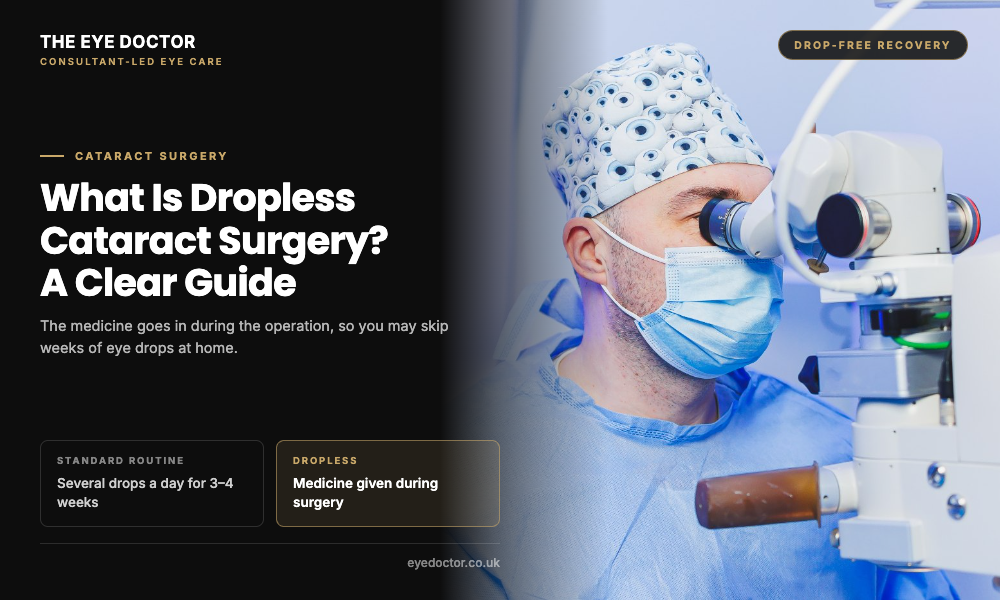
Dropless cataract surgery is a method in which the surgeon injects the key medications into the eye during the operation. So you may not need to use eye drops for weeks afterwards. These medicines, an antibiotic and an anti-inflammatory, calm the eye and guard against infection while it heals.
This matters because the usual routine calls for several drops a day for three to four weeks. That can be hard if you have shaky hands, poor sight in the other eye, or no one at home to help. So a drop-free option can make recovery simpler for many people. However, it is not right for everyone, and most UK clinics still use the standard drop routine.
Key Takeaways
- Dropless cataract surgery delivers the medicine into the eye during the operation, so you may avoid weeks of eye drops.
- There are two key medicines. An antibiotic helps prevent infection, and a steroid brings down inflammation and redness
- It can help people who find drops difficult to use, such as those with arthritis or memory problems.
- It is not suitable for everyone. People with glaucoma or raised eye pressure usually need the standard drops.
- The approach is still fairly new in the UK. Some clinics offer it, but many still use the normal drop routine.
- Speak to an eye specialist to find out which option best suits your eyes.
What Does Dropless Cataract Surgery Mean?
In a normal cataract op, the surgeon removes the cloudy lens and replaces it with a clear one. After that, you use eye drops to prevent infection and calm the eye while it heals. The dropless method changes one part of this. The surgeon gives those same medicines during the operation, not as drops you take at home.
So the eye already has what it needs before you leave the clinic. You may also hear this called drop-free cataract surgery. Both terms mean the same thing. The aim is fewer drops, for fewer days, or sometimes none at all.
How Does Dropless Cataract Surgery Work?
The surgeon delivers the medicine in a couple of ways at the end of the operation. This happens while you are still numb, so you should feel barely a thing.
- An antibiotic is placed inside the eye (an intracameral antibiotic). This guards against a rare but serious eye infection. The NHS already uses an antibiotic called cefuroxime in the eye for routine surgery, so this part is well established.
- A long-lasting steroid given at the end of surgery, often as a small deposit near the eye. This calms inflammation while the eye heals.
- Sometimes an extra anti-inflammatory medicine, kept for people at higher risk.
Even with a drop-free plan, some people still use one drop, such as a lubricant for comfort. So the plan is shaped around your own eyes and needs.

Worried About Eye Drops After Cataract Surgery?
A clear eye check takes the worry out of what comes next.
- The specialists at The Eye Doctor explain your treatment in plain words.
- You will know exactly what your recovery and aftercare involve.
- You get honest advice on the right option for your eyes.
What Are the Benefits of Dropless Cataract Surgery?
For the right person, a drop-free approach can make life much easier after surgery. The main benefits include:
- No need to keep track of a drop routine for weeks.
- Real help for people with arthritis, shaky hands, or poor sight who struggle with drops.
- Fewer missed doses, so the medicine works as planned. This is a bigger deal than it sounds, as roughly a third of people do not use their drops correctly.
- Less plastic waste from drop bottles, and fewer trips to the pharmacy.
- A simpler recovery, with less to remember at a stressful time.
Who Is Suitable for Dropless Cataract Surgery?
Most people who can have standard cataract surgery may be able to have dropless cataract surgery. It often suits those who would find drops hard to manage on their own. Still, it is not right for everyone.
Your surgeon may avoid the dropless method if you have:
- glaucoma or raised eye pressure (ocular hypertension)
- a known steroid response, where your eye pressure climbs when you use steroids
- damage to the optic nerve
- a younger age with a longer eyeball, which raises the risk of a pressure spike
So the right choice depends on a proper check of your eyes and your general health. Your eye team weighs the benefits against the risks before recommending it.
Tired of Cloudy, Blurry Vision?
Clear, sharp sight can bring back the moments you miss most.
- Mrs Indira Madgula and the team check your eyes with real care.
- You get a plain, step-by-step plan, with no jargon.
- Ask anything about cataract surgery and what suits you best.
What Are the Risks and Side Effects?
Like any procedure, the dropless method carries some risk. Most people have a smooth recovery, but it helps to know what can happen. Possible issues include:
- A short-term rise in eye pressure, mostly in people who react to steroids
- A small red patch on the white of the eye where the medicine went in, which fades on its own
- Floaters or shadows in your sight for a short while, as the medicine settles
These effects are usually mild and pass with time. Even so, report any sudden change in your sight straight away, as quick checks help keep your eyes safe.
Is Dropless Cataract Surgery Available on the NHS in the UK?
Yes, in a few places. A few big NHS eye clinics now offer it, and more may follow in time. In 2026, UK eye surgeons issued guidance on the dropless method. They say it is safe for the right people, as long as the eye team checks them first.
However, it is still a newer option. Many clinics, both NHS and private, still use the proven drop routine, because it works well for most people. The best step is to ask your eye team what they offer and what suits your eyes.
Conclusion
So, what is dropless cataract surgery? It is a way to deliver the medicine your eye needs during the operation, so you can avoid weeks of drops. For the right person, it simplifies recovery and removes a real worry. But it doesn't suit everyone, and a proper eye check is the only way to know whether it's right for you.
If cloudy vision is affecting your day, the team at The Eye Doctor in Huddersfield can assess your eyes and explain your cataract surgery options in plain language. Mrs Indira Madgula and the specialists explain each step clearly so that you can choose with confidence and peace of mind.
Frequently Asked Questions
Is dropless cataract surgery safe?
For the right patient, yes. Studies show good results when the eye team carefully selects suitable patients. The main thing to watch for is eye pressure in people who react to steroids, so your surgeon checks it first.
Will I still need any eye drops?
Maybe one or two. Some people use a lubricant for comfort, or a pressure drop if needed. The aim is far fewer drops than the usual three-to-four-week routine, and sometimes none at all.
Is dropless cataract surgery available on the NHS?
In some places, yes. A few NHS providers offer it, and the choice grows over time. Many clinics still use the standard drops, so it is worth asking your own eye team what they provide.
Who cannot have dropless cataract surgery?
It may be avoided for people with glaucoma, raised eye pressure, or a known steroid response. Some younger patients with a longer eyeball are also at higher risk. Your surgeon will check your eyes before making a decision.
Does dropless cataract surgery cost more?
Costs vary by clinic. In the UK, the medicine itself is fairly low cost, so it does not always add a large fee. Ask your provider for clear pricing before you decide.
Is dropless cataract surgery painful?
No more than standard cataract surgery. The eye is numbed first, so you should feel little to nothing. Any soreness afterwards is usually mild and settles within a few days.
What medicine is used in dropless cataract surgery?
Usually an antibiotic to stop infection and a steroid to calm the eye. Sometimes doctors add an extra anti-inflammatory for higher-risk eyes.