

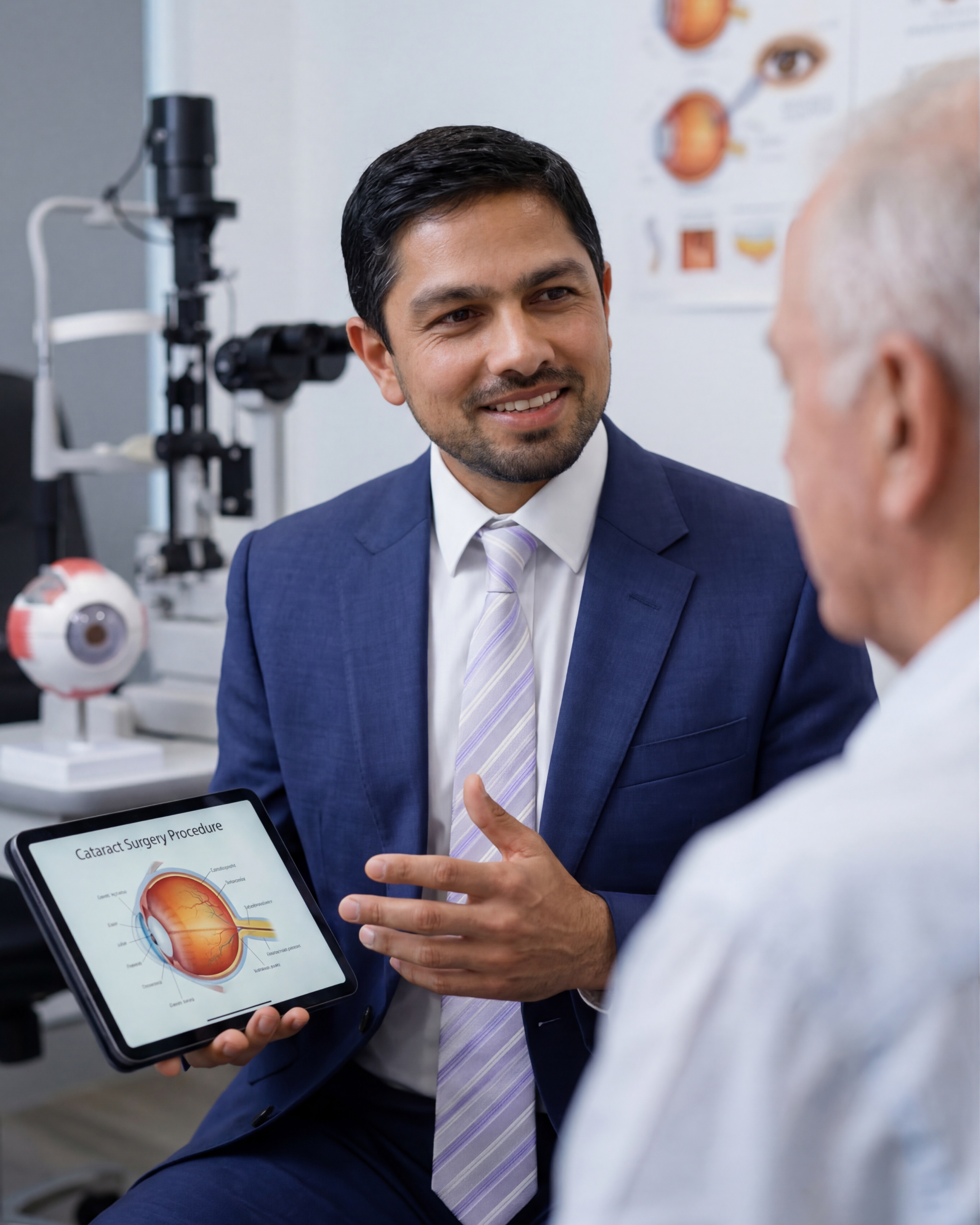
How long after cataract surgery can you bend over? Most UK eye units ask you to avoid bending your head below your waist for at least the first week, and some extend this to two weeks. Short, gentle movements, such as slipping on shoes, are often allowed. The exact advice depends on your eye, your operation and your surgeon, so your follow-up appointment is the point to confirm when normal bending can return.
This guide explains why bending is limited after cataract surgery, what NHS eye units commonly advise, how to manage everyday tasks safely and which symptoms mean you should contact your eye team.
Takeaways
- Most UK eye units advise avoiding bending your head below your waist for at least the first week after cataract surgery, with some advising two weeks.
- Bending forward briefly raises the pressure inside the eye, which is why surgeons ask you to limit it while the small wound heals.
- Short bends, such as putting on socks or shoes, are often allowed, but avoid long periods with your head down early on.
- Heavy lifting and straining are usually limited at the same time, and The Eye Doctor Clinic advises avoiding heavy lifting and strenuous exercise for two to three weeks.
- Your surgeon gives the final word on when you can bend normally again, based on how your eye is healing.
Why Is Bending Restricted After Cataract Surgery?
During cataract surgery, the surgeon makes a tiny opening at the edge of the eye's clear front window, called the cornea. Through this opening, the surgeon removes the cloudy natural lens and places a clear artificial lens inside. The NHS notes that stitches are usually not needed, because the small wound seals by itself.
While the wound heals, surgeons prefer to keep eye pressure steady. Bending forward changes that pressure. In a small study of healthy adults published by ARVO, eye pressure rose from an average of about 16 mmHg while sitting to about 20 mmHg while bending over to touch the toes. The researchers noted that bending and straining after surgery might reasonably be discouraged, although the clinical importance of these short rises is still being studied.
So the restriction is a precaution. A brief bend is unlikely to cause harm on its own, but limiting bending in the early days is a simple way to protect a healing eye. It also lowers the chance of knocking or rubbing the eye, or of dust and debris getting in.
How Long After Cataract Surgery Can You Bend Over?
There is no single national rule, and advice varies by hospital and surgeon. Patient leaflets from NHS eye units give a useful picture of common practice:
- Guy's and St Thomas' NHS Foundation Trust advises against bending forward or lifting the evening after surgery, and against bending down in the weeks after surgery until your follow-up appointment.
- NHS Western Isles advises avoiding bending down for long periods during the first two weeks, while noting that bending to put on socks and shoes is acceptable.
- Princess Alexandra Hospital NHS Trust lists not bending over, such as when tying shoes or picking things up, among its key recovery points.
- Hull University Teaching Hospitals NHS Trust advises avoiding heavy lifting and straining for the first week.
At The Eye Doctor Clinic, our aftercare guidance advises avoiding bending, lifting and vigorous activity on the first day, and our cataract surgery FAQs advise avoiding strenuous exercise and heavy lifting for two to three weeks. Your consultant will tailor this to your eye at your follow-up check.
Taken together, a careful first week is standard, and many people are asked to take extra care for up to two weeks. If you have had a more complex operation, or you have another eye condition such as glaucoma, your surgeon may ask you to wait longer.

Unsure What Is Safe for You After Surgery?
Every eye heals differently. A consultant at The Eye Doctor Clinic can review your recovery and explain which activities are safe for you, and when.
Book Free ConsultationA General Guide to Bending During Recovery
The table below summarises the type of advice many UK eye units give. It is a general guide only. Always follow the written instructions from your own surgeon.
| Recovery stage | Bending | Lifting and straining |
|---|---|---|
| Day of surgery and first night | Avoid bending forward | Avoid lifting |
| First week | Avoid bending your head below your waist; short bends for socks or shoes may be allowed | Avoid heavy lifting and straining |
| Second week | Some units still advise avoiding long periods of bending | Many units still advise avoiding heavy lifting |
| After your follow-up check | Return to normal bending once your surgeon is happy with healing | Return to heavier tasks and exercise when cleared |
Everyday Tasks That Involve Bending
Many daily jobs involve bending without us noticing. These simple swaps can help you follow your aftercare advice.
Putting on Shoes and Socks
Sit on a chair and bring your foot up towards you, rather than bending down from standing. Slip-on shoes and a long-handled shoehorn make this easier in the first week.
Picking Things Up From the Floor
Bend at the knees and keep your head upright, rather than tipping your head forward. A grabber tool can help, or ask someone at home to pick things up for you.
Washing Your Hair
The Eye Doctor Clinic advises that you can shower the day after surgery, but should keep water, soap and shampoo out of the eye for at least one week. Tilt your head back, rather than forward over a sink or bath, and avoid splashing.
Housework and Gardening
Lighter housework is usually fine, but avoid tasks that need long periods with your head down, such as scrubbing floors, cleaning the bath or weeding. Gardening also brings dust and soil close to the eye, so many NHS units advise waiting before you return to it.
Caring for Pets and Grandchildren
Lifting small children or heavy pets often means bending and straining at the same time. Ask for help with these tasks until your surgeon says it is safe.
Using the Toilet
Straining hard can temporarily raise eye pressure, much like bending. Drink plenty of water and eat foods with fibre, and speak to your pharmacist if constipation becomes a problem.
Bending, Lifting and Exercise: How They Differ
Bending, lifting, and exercise are often grouped together in aftercare leaflets, but they differ slightly.
- Bending puts your head below your heart, which raises eye pressure while you stay in that position.
- Lifting and straining, especially if you hold your breath, can also briefly raise eye pressure.
- Exercise raises your heart rate and can bring sweat, dust or knocks close to the eye.
The NHS advises no heavy lifting or sport while your eye recovers, and no swimming, even with goggles. The Eye Doctor Clinic advises that light walking is fine from the day after surgery, while strenuous exercise and heavy lifting should wait two to three weeks, and swimming four to six weeks. For a wider look at what to expect, read our guide to cataract surgery aftercare.
What If You Bend Over by Accident?
Try not to worry. A single, brief bend is a common slip in the first few days and usually does not cause a problem. Simply stand up again and continue following your aftercare plan.
Contact your eye team if you notice any of the warning signs listed below after bending, knocking or rubbing the eye.
Questions About Your Recovery?
Our team is here between appointments if something does not feel right. Speak to The Eye Doctor Clinic for clear, consultant-led advice on your aftercare.
Book Free ConsultationOther Ways to Protect Your Eye While It Heals
Bending is only one part of a safe recovery. The NHS and The Eye Doctor Clinic both recommend a few simple habits:
- Use your eye drops exactly as prescribed, usually for about four weeks
- Wear your eye shield at night while your eye heals
- Do not rub or press on the eye
- Wear sunglasses if light feels too bright, and an eye shield or glasses in windy weather
- Avoid eye make-up until your surgeon says it is safe
- Do not drive until your vision meets the DVLA standard and your eye team agrees
Blurred vision is common in the first few days. If you would like to know what is normal, read is it normal to have blurry vision after cataract surgery. For guidance on getting back behind the wheel, see when you can drive after cataract surgery.
When to Contact Your Eye Team
Most people recover from cataract surgery without problems, and serious complications are rare. Still, some symptoms need a prompt check. Contact your surgeon or eye clinic straight away if you notice:
- Pain that gets worse rather than better
- Vision that gets worse after an early improvement
- Increasing redness, discharge or a sticky eye
- Swelling of the eyelids
The NHS advises getting urgent help from NHS 111 if floaters suddenly appear or increase, you see flashes of light, a dark curtain or shadow moves across your vision, or your vision suddenly becomes blurred. These can signal a detached retina, which needs prompt treatment.
Conclusion
So, how long after cataract surgery can you bend over? Most UK eye units advise avoiding bending your head below your waist for at least the first week, and some recommend extra care for two weeks. Short, gentle movements, such as putting on shoes, are often allowed. The aim is to keep eye pressure steady and protect the small wound while it heals.
Everyone heals at their own pace, so follow your surgeon's written advice and ask at your follow-up appointment when you can return to normal bending, lifting, and exercise.
If you are planning surgery or would like expert aftercare, the consultant-led team at The Eye Doctor Clinic provides cataract surgery in Huddersfield, with personalised aftercare instructions and follow-up appointments built into your care.
FAQs
Can I bend down after cataract surgery?
Brief, gentle bends, such as putting on shoes, are often allowed. However, most UK eye units advise avoiding bending your head below your waist for at least the first week. Follow your surgeon's advice.
Why can't you bend over after cataract surgery?
Bending forward briefly raises the pressure inside the eye. Surgeons prefer to keep this pressure steady while the small surgical wound heals, so they ask you to limit bending in the early days.
Can I tie my shoelaces after cataract surgery?
Some NHS units allow short bends to put on socks and shoes, while others advise against bending to tie shoes. Sitting down and lifting your foot towards you, or wearing slip-on shoes, is a simple way to avoid bending in the first week.
When can I lift heavy things after cataract surgery?
The NHS advises no heavy lifting while your eye recovers. The Eye Doctor Clinic advises avoiding heavy lifting and strenuous exercise for two to three weeks. Your consultant will confirm when it is safe for you.
Can I wash my hair after cataract surgery?
Yes. You can usually shower the day after surgery. Tilt your head back rather than forward, and keep water, soap and shampoo out of the eye for at least one week.
What happens if I bend over too soon after cataract surgery?
A single short bend does not usually cause a problem. Contact your eye team if you notice worsening pain, worsening vision, increasing redness, flashes, new floaters or a shadow across your sight.
Can I do yoga after cataract surgery?
Yoga poses that place your head below your heart can raise eye pressure while you hold them. Leave head-down poses until your surgeon confirms your eye has healed.