
Glaucoma Tube Surgery in Huddersfield
Living with advanced glaucoma feels stressful, especially when your eye pressure stays high even after drops, laser or earlier surgery. If that sounds like you, take a breath; you are in safe, experienced hands. At The Eye Doctor Clinic, our glaucoma specialists in Huddersfield use precise tube surgery to bring stubborn pressure under control and protect the sight you still have. Everything stays calm, clear and completely consultant-led, so from your first phone call to your final check-up you deal with people who explain every step and answer every question.
In plain English
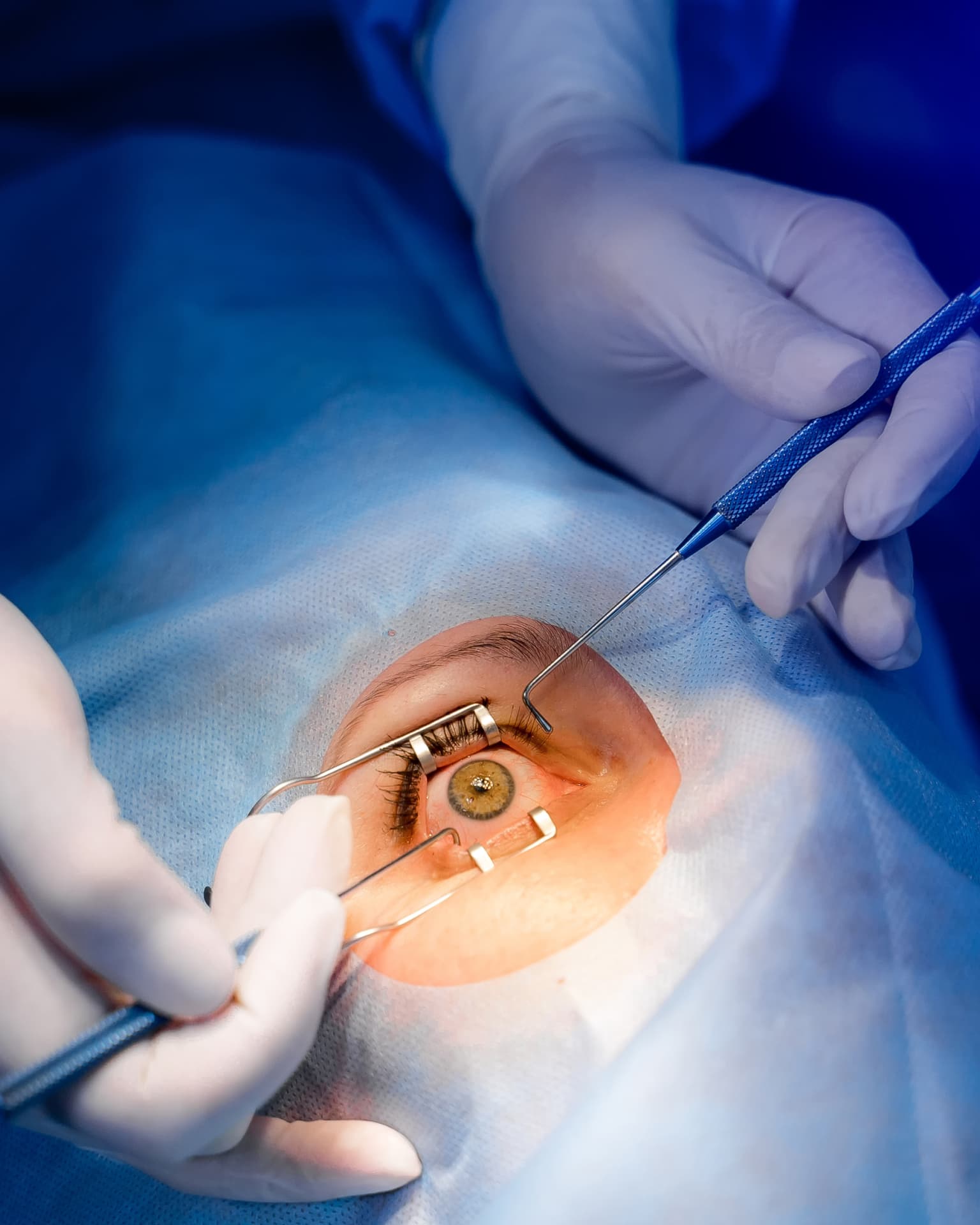
A very fine tube is placed in the eye to carry fluid away to a small reservoir under the surface, lowering the pressure. It is usually chosen when drops or earlier surgery have not controlled things.
New to this? Read our full guide to glaucoma treatment
Affiliations & As Seen In










Hear from Our Patients
Exceptional Care, Led by Experts
Meet our specialists, explore our clinic, and hear real patient experiences.
What is Glaucoma Tube Surgery?
Tube surgery is typically recommended when standard glaucoma treatments or previous operations have not sufficiently lowered internal eye pressure. While initial care often starts with eye drops, complex cases that threaten your sight require this specialist procedure to prevent further damage to the optic nerve.
During tube surgery, your surgeon carefully inserts a microscopic drainage shunt into the eye. To ensure long-term stability and success, we use an advanced technique where a tiny silicone tube is connected to a small reservoir plate tucked beneath the eyelid. This creates a permanent, controlled pathway for excess fluid to drain away safely, effectively regulating the pressure inside your eye.
Why Choose Glaucoma Tube Surgery?
Glaucoma damage cannot be undone, but tube surgery can stop it from getting worse. Your consultant may recommend it when you are facing any of the following:
How Does Glaucoma Tube Surgery Work?
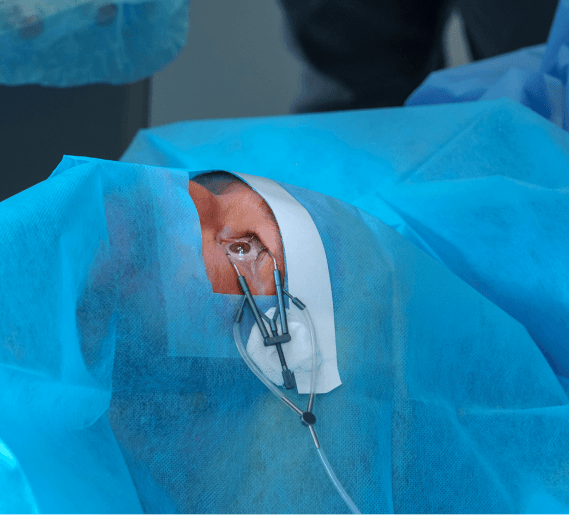
Tube surgery is a careful, microscopic procedure, and we make sure you stay comfortable from start to finish. Here is what happens, step by step:
The Procedure, Step by Step
We numb the eye with local anaesthetic, so you feel no pain.
Your surgeon gently lifts the thin surface layer of the eye (the conjunctiva).
A soft silicone plate is secured to the white of the eye, under the lid and out of sight.
A fine tube is placed into the front of the eye to carry fluid to the plate.
Stitches hold everything in place and control the flow while you heal.
A protective shield goes on, and we see you again the very next day.
It normally takes 1 to 2 hours to complete the procedure. You will need to use antibiotic and steroid drops after surgery, and your eye may appear reddish and slightly swollen for several weeks afterwards.
Glaucoma Tube Surgery at a Glance
Procedure Time
1-2 hours
Approximately
Anaesthetic
Local
Awake and comfortable
Downtime
2-4 weeks
Initial healing
Back to Work
2-4 weeks
Depending on your job
Result Duration
Long term
Lasting pressure control
Cost
Enquire
For specialist pricing
Benefits of Glaucoma Tube Surgery
Protect the sight you still have by halting further optic-nerve damage.
Bring stubborn eye pressure under control, even in complex cases.
Cut down on or move past daily drops and their side effects.
Drive and get around with more confidence as your sight stabilises.
Trust fellowship-trained glaucoma surgeons with complication rates below 0.5%.
Relax in a calm, CQC-registered clinic with direct access to your surgical team.
Mrs Indira Madgula
MS · DNB · FRCS (Glasgow) · FRCOphth (London)
Consultant Ophthalmic Surgeon & Glaucoma Specialist

Mrs Madgula is a Consultant Ophthalmic Surgeon and Glaucoma Specialist with an exceptional record in transforming glaucoma services, medical education, and international examining. Her pioneering work in shared care glaucoma received national recognition through a prestigious HSJ Award nomination, and she was the first trainee in the UK selected as an examiner for the Royal College of Ophthalmologists.
Dr Fayyaz Musa
MBChB (Edin) · FRCOphth (Lon) · CertLRS (RCOphth) · PGDipCRS
Founder & Consultant Corneal, Cataract & Glaucoma Surgeon

Dr Fayyaz Musa is the founder of The Eye Doctor Clinic and a recognised expert in anterior segment surgery. He is one of a small number of surgeons in the UK who holds dual fellowship training in both corneal disorders and glaucoma, and is the pioneer of DMEK surgery in the North of England. In cataract surgery, Dr Musa combines meticulous surgical technique with advanced biometry to deliver outstanding visual outcomes — including premium trifocal and toric lens implants for patients seeking full spectacle independence.
Glaucoma Tube Surgery Consultation Process
We take a no-pressure approach. Your journey is designed to feel as smooth and clear as the sight we are working to protect.
The Phone Assessment
It starts with a relaxed, 15-minute chat with one of our experts. We listen to your concerns, talk through your options and check whether you are a likely candidate, all before you set foot in the clinic.
The Clinical Consultation
You meet your consultant for a full examination. Using advanced scanners, we measure your intraocular pressure, examine your optic nerve, and map your visual fields, and we take as much time as you need to ask questions.
Your Treatment Day
On the day, we numb the eye with anaesthetic drops and carry out your tube surgery while you relax in our care. We do exactly what is needed to bring your pressure down, nothing more.
Dedicated Aftercare
Your recovery is important to us. After surgery, you will receive a detailed personal recovery plan along with contact details of your surgical team.
Frequently Asked Questions
We confirm this with a clinical examination. Tube surgery is usually recommended when drops, laser, or earlier surgery no longer control your pressure, or when glaucoma is complex or progressing. Your consultant reviews your pressure, nerve health and visual fields before advising you.
Most patients have tube surgery under local anaesthetic, so the eye is completely numb while you stay awake and comfortable. If you feel anxious or your case is complex, talk to your consultant about your options.
Yes. Our surgeons are glaucoma specialists with complication rates below 0.5%, and you receive direct telephone numbers for total peace of mind. Every procedure is carried out in a dedicated clinical setting with consultant-led care throughout.
Drops, SLT laser and keyhole (MIGS) surgery are usually tried first. When these no longer maintain low enough pressure, a tube implant is one of the most dependable ways to protect the optic nerve. Your consultant will talk through every option openly before making a recommendation.
Unfortunately, no treatment can restore any eyesight lost due to glaucoma. The goal of tube surgery is to keep your intraocular pressure under control and prevent further damage.
Read About Our Happy Patients
What a great experience! Very reassuring and I am very grateful for the consultation from Dr Musa he was so helpful in helping me make a decision to proceed to having eye correction surgery. I have the upmost confidence in him and the team at the Eye Doctor Clinic, Huddersfield.
Lozza 747I had implants with Dr Musa ten years ago. It was the best thing I've ever done. They are brilliant. My sight both near and distant was very poor but since the op I've had no glasses no lenses and my sight has been super. It remains really good to this day. Thank you Dr Musa. Brilliant consultations and treatment for glaucoma since.
Kay FitbitI can highly recommend the Eye Doctor Clinic, and I am so pleased I went there. Dr Musa, Gemma and Jess are lovely. They are very knowledgeable and were able to answer all my questions. My vision following surgery is great, and not having to wear glasses is fantastic.
Carol PeelMeet the Team




Where to Find Us
Three convenient locations across West Yorkshire. Visit us for consultations, diagnostics, and treatments.
Bolton
136 – 140 Newport St
Bolton, Greater Manchester
BL3 6AB
Huddersfield
Woodlands, 4 Longbow Close
Huddersfield, HD2 1GQ
Protect Your Sight With Expert Tube Surgery in Huddersfield
Contact us today to schedule an appointment with our glaucoma experts and create a customised treatment plan that suits you best. Don't let this silent thief steal your vision. Take your time, get all the help you need, and we'll stop this thief for good.