High eye pressure does not usually cause blurred vision. Most people with raised pressure inside the eye see perfectly well and feel nothing. The problem is silent, which is why it often turns up by chance during a routine eye test.
There is one case where it does. If the pressure rises quickly and becomes very high, the front of your eye swells. Your sight can go misty in a few hours. That kind of blur needs help the same day. This guide shows you which one you are dealing with.
Key Takeaways
- Raised eye pressure on its own is nearly always silent and painless.
- Blurred vision points to a sudden, severe pressure spike, not a mild one.
- Normal eye pressure is between 10 and 21 mmHg.
- Only a pressure test can tell you where you stand.
- Blurred sight with eye pain, halos or sickness needs same-day care.
Why High Eye Pressure Usually Causes No Symptoms
Your eye is strong. The white outer part keeps its shape, so the pressure can go above normal and you feel nothing. No pain nerves inside warn you when it rises slowly. Your sight stays clear because the lens and cornea still do their job.
This is the part most people find hard to accept. You can walk around for years with pressure well above normal and feel completely fine. Meanwhile, the optic nerve at the back of the eye quietly takes the strain.
So if you feel well, that does not mean your pressure is normal, and it does not mean it is high. Only a test settles it.
When High Eye Pressure Does Blur Your Vision
High intraocular pressure and blurred vision often show up at extreme pressure.
A sudden, sharp spike. If pressure shoots up quickly, fluid is forced into the cornea, the clear window at the front of your eye. The cornea swells and turns slightly cloudy. Sight goes misty, and lights pick up rainbow rings around them. This tends to happen once pressure passes roughly 35 mmHg.
Long-term nerve damage. When high pressure harms the optic nerve over many years, you lose your side vision first. Hardly anyone spots it at this stage. In time, the gap grows, and things like reading or driving get harder. At that point it is glaucoma, not just high pressure.
The pattern matters more than the blur itself. Slow, gradual haze in both eyes is far more likely to be a new glasses prescription, dry eye or a cataract. Sudden haze in one eye, with ache and halos, is a pressure emergency.

Worried About a Pressure Reading Your Optician Mentioned?
A single number does not tell the whole story. A consultant-led assessment looks at the nerve itself, not just the pressure.
Book Free ConsultationWhat Is a Normal Eye Pressure Range?
Normal eye pressure sits between 10 and 21 mmHg. The reading is taken in millimetres of mercury, the same unit used for blood pressure. Anything above 21 mmHg counts as ocular hypertension. The measurement alone is not the full answer, for two reasons.
- Corneal thickness skews the result. A thick cornea gives a falsely high reading. A thin one gives a falsely low reading. This is why a proper assessment includes measuring the cornea too.
- Pressure moves through the day. It is often highest in the morning. One reading is a snapshot, not a trend.
Some people also develop nerve damage even when their pressure stays within the normal range. This is called normal tension glaucoma. It is another reason a single number never gets the final word.
What Causes High Intraocular Pressure?
Several things push the pressure up. Some you can do nothing about. Others are worth a conversation with an eye specialist.
- A blocked or narrowed drainage mesh, which is the most common cause
- Age over 40, when drainage naturally becomes less efficient
- A family history of glaucoma or raised pressure
- Steroid medicines, whether as drops, tablets or inhalers
- Diabetes and high blood pressure
- A past eye injury or eye surgery
- Short sight, which slightly raises the risk of open angle problems
- African Caribbean or South Asian heritage, both linked to higher risk
Steroids deserve a special mention. People often take them for months for a skin, chest or joint problem and never connect them to their eyes. If you take steroids long-term, mention it at every eye appointment.
Other Signs of High Eye Pressure to Watch For
Ocular hypertension symptoms are rare and vague. When they do show, it is easy to blame them on tiredness or screen use. Look out for a dull ache in or behind the eye, headaches around your brow or forehead, halos or rings around lights, a red eye that aches, and poor vision in dim light.
None of this means your pressure is high. It is still worth a check, and more so if you notice two or three at once.
Do Not Wait for Symptoms That May Never Come
Pressure damage is silent and permanent once it happens. Early checks protect the sight you still have.
Book Free ConsultationOcular Hypertension vs Glaucoma: What Is the Difference?
People use these two terms as though they mean the same thing. They do not.
Ocular hypertension means the pressure is above normal, but the optic nerve looks healthy and your field of vision tests normal. Nothing has been lost. The plan is usually careful monitoring, and sometimes drops or laser to bring the number down.
Glaucoma means the pressure has already damaged the optic nerve, and some vision has been lost. The lost vision does not come back. Treatment protects what remains.
Most people with raised pressure never develop glaucoma. Raised pressure is still the biggest risk factor, which is why it is monitored so closely. For the full picture, our glaucoma guide explains how it develops and what treatment involves.
How an Eye Pressure Test Works
The test is quick and painless. There are two common methods.
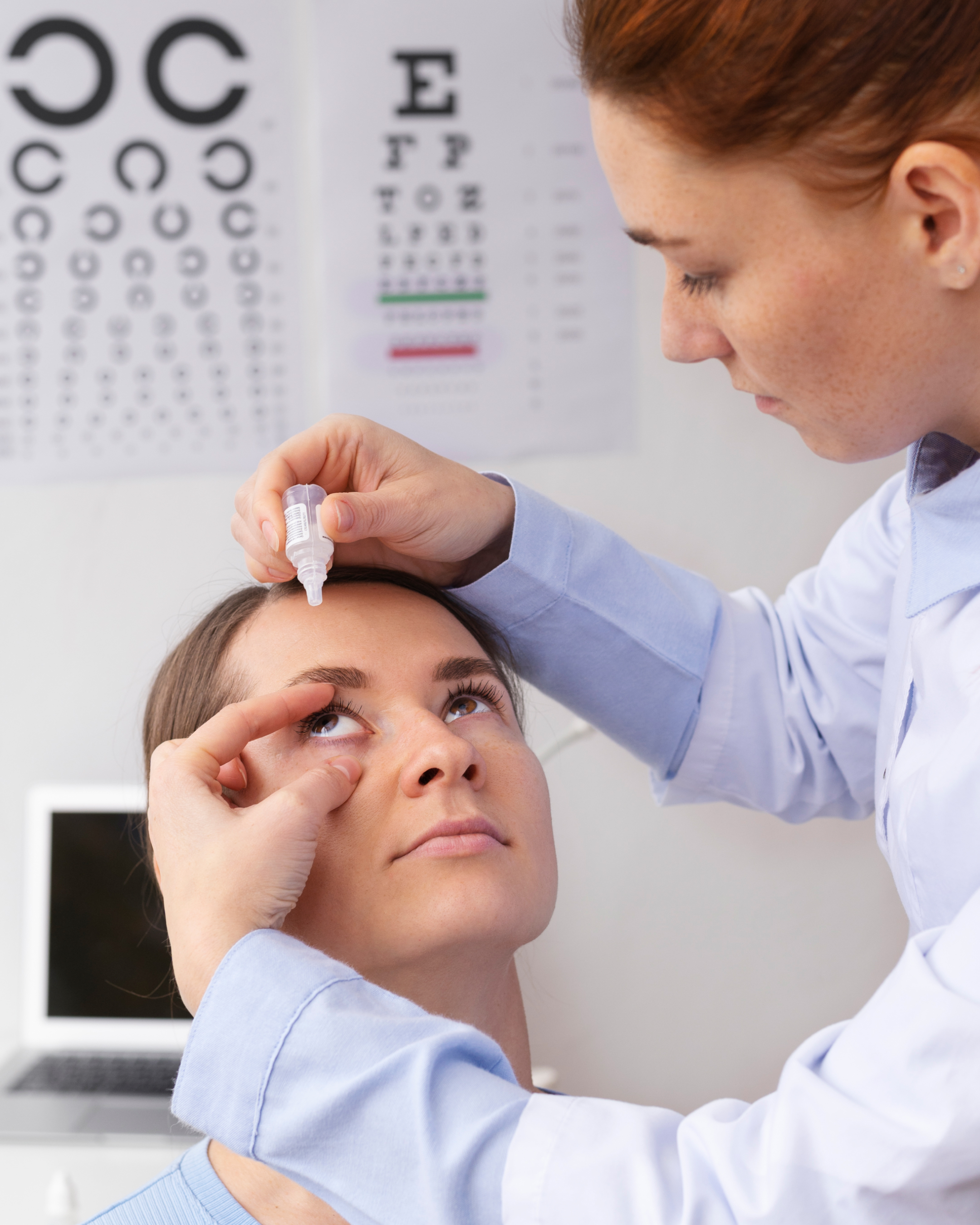
The air puff test. A machine sends a small puff of air at your eye and measures how much the surface flexes. It takes seconds, and nothing touches your eye. Most high street opticians use this one.
Goldmann applanation tonometry. A drop numbs the eye, then a small probe rests gently against the cornea. This is the hospital standard and the more accurate of the two.
A proper glaucoma assessment goes further than pressure alone. It adds an optic nerve scan, a visual field test to map your side vision, and corneal thickness measurements. Put together, these tell a specialist whether raised pressure has caused any harm. A single number never can.
If your optician has flagged a high reading, a consultant-led review at a private glaucoma treatment clinic in Huddersfield can explain what it means and outline your options.
Blurred Vision That Has Nothing to Do With Pressure
Most blurred vision has a simpler cause. Before you worry about your pressure, consider an out-of-date glasses or contact lens prescription, dry eye, a cataract, diabetes, migraine, or tired eyes after long screen use. All of these are common, and none of them is an emergency. An exam helps determine which one you have.
Red Flags: When to Get Help Straight Away
Some symptoms cannot wait for a routine appointment. Get urgent care the same day if you have blurred vision along with any of these:
- Severe pain in or around one eye
- A red eye that also aches
- Halos or rainbow rings around lights
- Nausea or vomiting with eye pain
- A sudden drop in vision in one eye
- An eye that feels hard and sore to touch
Together, these point to acute angle closure. The drainage channel blocks all at once and the pressure shoots up. Treated quickly, the eye usually recovers. Left too long, the damage sticks.
Conclusion
So, does high eye pressure cause blurred vision? In most cases, no. You will not feel high pressure, and you will not notice it either. Blur happens when pressure jumps very high, or if your optic nerve is already damaged. A simple check tells you far more than how your eyes feel.
If an optician has mentioned a high reading, or glaucoma runs in your family, a specialist review will tell you where you truly stand. The glaucoma team at The Eye Doctor Clinic in Huddersfield offers detailed assessment and clear answers about your eye pressure and your risk.
FAQs
Can high eye pressure be reversed?
The pressure itself can come down with drops, laser or surgery. That part is treatable. What cannot be undone is sight already lost to nerve damage, so the sooner you catch a problem, the more sight there is to protect.
How do you check if your eye pressure is high?
An optometrist or ophthalmologist measures it with tonometry, either an air puff test or a numbed probe against the cornea. You cannot judge it by how your eyes feel.
Can high eye pressure cause blurred vision in one eye only?
Yes. An acute pressure spike almost always affects one eye at a time, so sudden blur in a single eye with ache or halos is the classic warning sign. Gradual blur in both eyes is far more likely to be your glasses prescription, dry eye or a cataract.
Does high eye pressure always lead to glaucoma?
No. Most people with ocular hypertension never develop glaucoma. The higher and longer the pressure stays raised, the greater the risk, which is why monitoring is recommended.
Can stress or anxiety raise eye pressure?
Stress causes short-lived changes in pressure but does not cause ocular hypertension. Persistent raised readings have a physical cause in the drainage system.
How often should you have your eye pressure checked?
Every two years for most adults, and yearly from age 40 if you have a family history of glaucoma, diabetes or long-term steroid use.