No, high eye pressure does not always mean glaucoma. Many people live with raised pressure for years and never develop the condition because glaucoma only begins once the optic nerve shows damage.
Doctors call raised pressure without nerve damage ocular hypertension. It is a risk factor for glaucoma rather than the disease itself, which is why eye specialists treat the two very differently.
This guide explains the difference in plain language. It covers what a raised pressure reading means, why it happens, how specialists test for it, and when treatment becomes the sensible next step, so a raised reading never has to mean months of quiet worry.
Key Takeaways
- Increased intraocular pressure is a risk factor for developing glaucoma, not a diagnosis.
- Ocular hypertension means increased pressure with a normal optic nerve.
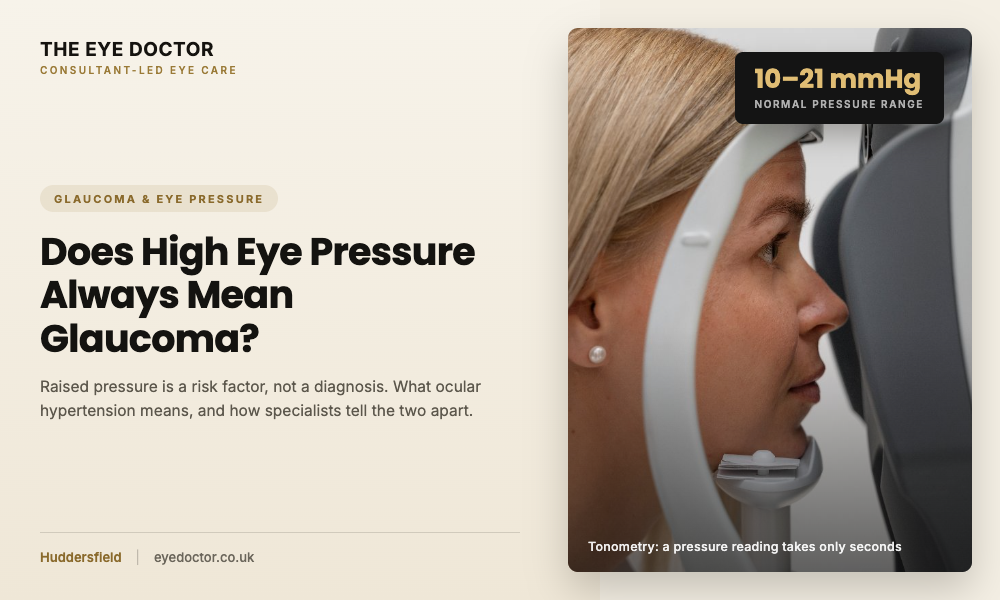
- The normal range of pressure is from 10 to 21 millimetres of mercury (mmHg).
- Increased pressure does not always cause symptoms, so regular testing is essential.
- Reducing pressure helps protect the optic nerve from damage.
Why High Eye Pressure Is Not Always Glaucoma
Glaucoma is defined by optic nerve damage, not pressure alone. A person can have readings above the normal limit for years without any nerve changes. Equally, some people develop glaucoma even though their pressure never rises. A diagnosis of high eye pressure describes a measurement, nothing more.
In one large British study, most people newly diagnosed with the common form of glaucoma had intraocular pressure readings within the normal range. That finding changed how specialists screen for the disease, because it proved a single reading cannot confirm or rule out glaucoma on its own.
This is why an optometrist who records a raised result refers you for a fuller assessment rather than starting treatment straight away. Pressure is one clue among several, an important one, but never the full story.
What Is Ocular Hypertension?
Ocular hypertension is high eye pressure when the optic nerve is healthy, and vision is clear. About four out of 100 people above age 40 have ocular hypertension, but not all of them eventually acquire glaucoma.
The pressure comes from a clear fluid called aqueous humour, which the eye makes and drains constantly. When the fluid drains more slowly than the eye produces it, pressure builds up a little, like a sink filling faster than the plug hole can empty it.
Specialists often describe someone in this position as a glaucoma suspect. The label sounds alarming, but it simply means the eyes deserve closer watching. If the nerve ever shows early change, consultant-led glaucoma treatment in Huddersfield can begin before sight is affected.
What Is the Normal Eye Pressure Range?
The normal eye pressure range sits between 10 and 21 millimetres of mercury (mmHg). Readings that stay above 21 mmHg are considered elevated, although the number alone never tells the whole story.
Pressure also varies through the day, often peaking in the morning. Specialists may take readings at different times before deciding whether a raised result is genuine or a one-off.
A thicker or thinner cornea can also nudge readings up or down, which is why a full assessment measures corneal thickness alongside pressure.

Told Your Eye Pressure Reading Is High?
- A clear explanation for a raised reading, not months of worry.
- Pressure, nerve health, and field of vision checked in a single thorough visit.
What Causes High Eye Pressure?
Understanding what causes high eye pressure starts with drainage. In most cases, the eye's drainage channels become less efficient over time, so fluid leaves the eye more slowly and pressure climbs.
Several factors raise the risk:
- Age, particularly from 40 onwards
- A close family history of glaucoma or raised pressure
- Long-term use of steroid medicines, including some drops and inhalers
- An eye injury, even one from years earlier
- Being very short-sighted or long-sighted
- African-Caribbean or East Asian family background
High Eye Pressure Symptoms: Why You Usually Feel Nothing
Genuine high-eye-pressure symptoms are rare, which is exactly what makes the condition easy to miss. Ocular hypertension causes no pain, redness, or day-to-day vision changes. Most people learn their pressure is elevated only during a routine eye test.
There is one important exception. A sudden, severe rise in pressure known as acute angle-closure produces obvious warning signs:
- Intense eye pain with a red, watering eye
- Blurred vision or halos around lights
- Headache, nausea, or vomiting
These signs require same-day medical care because a rapid spike can damage the optic nerve within hours.
Ocular Hypertension vs Glaucoma: The Key Difference
The ocular hypertension vs glaucoma question comes down to one structure: the optic nerve. Pressure describes a measurement. Glaucoma describes damage.
- Eye pressure: Ocular hypertension stays above 21 mmHg, while glaucoma can be raised or sometimes normal.
- Optic nerve: Healthy in ocular hypertension, but shows damage in glaucoma.
- Field of vision: Full in ocular hypertension, with gradual loss starting at the edges in glaucoma.
Around 2 in every 100 people over 40 in the UK have glaucoma, and it remains one of the world's leading causes of preventable sight loss. Once damage occurs, it cannot be repaired, which is why specialists act on early nerve changes rather than waiting for symptoms. The NHS glaucoma guide offers further detail on the condition itself.
Want a Clear Answer About Your Eye Health?
- Pressure checks with accurate, consultant-grade equipment.
- Detailed optic nerve scans and visual field testing.
- Honest guidance on whether treatment or simple monitoring suits your eyes.
How Does an Eye Pressure Test Work?
An eye pressure test, called tonometry, takes seconds and causes little or no discomfort. One method involves gently puffing air against the eye's surface. Another uses numbing drops and a small probe that lightly touches the cornea for a precise reading.
A positive result requires further testing. A comprehensive test will usually include:
- Tonometry: measuring the eye pressure
- Pachymetry: measuring the thickness of the cornea
- Visual Field Test: checking for vision loss in the peripheral vision area
- An OCT test showing a detailed picture of optic nerve fibres
Together, these tests show whether raised pressure has started to affect the nerve, the single question that separates monitoring from treatment.
How to Lower Eye Pressure: Treatment Options
Specialists decide how to lower eye pressure based on risk level, and for many people with mildly raised readings, the safest plan is regular monitoring with no treatment.
When treatment is needed, the main options are:
- Prescription eye drops. Daily drops that reduce the fluid the eye makes or improve its drainage. They are the most common first step.
- Laser treatment (SLT). Selective laser trabeculoplasty uses light pulses to help the natural drainage channels work better, and is often suggested when drops alone fall short.
- Surgical procedures. Trabeculectomy and deep sclerectomy surgery create new drainage pathways, whereas smaller tube devices are used in more complex cases.
Good practices play an important role in maintaining treatment results, however, they can never replace the treatment itself. Physical exercise, not smoking, and eye protection all contribute to good eye health.
What Happens If High Eye Pressure Goes Untreated?
Untreated high eye pressure does not always lead to harm, but the risk is real. Large studies suggest that around 1 in 10 people with untreated ocular hypertension develop glaucoma within five years. Once glaucoma causes sight loss, that vision cannot be restored.
There are factors to take into consideration in terms of treatment, which a competent specialist will tell you about:
- Eye drops may cause a stinging sensation, red eyes, or even a change in the colour of your eyes or lashes.
- Lasers may produce temporary swelling, while this method may require additional treatments.
- A surgical procedure involves some risk of infection or bleeding.
Weighing these points against the threat to the optic nerve is a decision best made with a consultant who has examined your eyes in detail. The NHS guide to glaucoma treatments sets out the standard options.
Conclusion
But is high intraocular pressure always glaucoma? Well, no. Pressure is a red flag, nothing more. Glaucoma is diagnosed only when there is evidence of optic nerve damage, and there are many who have high pressure levels and maintain healthy optic nerves throughout their lives.
The question is to determine your category. The assessment of pressure involves accurate measurement of your pressure levels, optic nerve assessment, and assessment of visual fields, turning uncertainties into a clear action plan, either a simple monitoring program or an early intervention program.
The Consultant Team at The Eye Doctor Clinic, headed by Dr Fayyaz Musa, offers comprehensive pressure assessments and glaucoma treatments in Huddersfield.
Frequently Asked Questions
Can you have raised eye pressure without glaucoma?
Yes. Raised pressure with a healthy optic nerve is called ocular hypertension. Many people have it for years, often for life, without ever developing glaucoma.
What level of eye pressure is considered high?
Readings that stay above 21 mmHg count as raised. Specialists usually confirm this over multiple visits because pressure naturally rises and falls throughout the day.
Does raised eye pressure go away on its own?
Sometimes readings settle, especially when you stop a temporary cause, such as a steroid medication. More often, mildly raised pressure persists and simply needs regular monitoring.
Can stress or caffeine raise eye pressure?
Both can nudge pressure up for a short time, but neither is a proven cause of lasting ocular hypertension. Specialists focus on drainage, age, and family history instead.
How often should eye pressure be checked?
Adults over 40 benefit from a sight test every two years, or yearly with a family history of glaucoma. In the UK, close relatives of glaucoma patients aged over 40 qualify for free NHS sight tests.
Is high eye pressure an emergency?
Usually, long-term raised pressure develops silently over years. The exception is a sudden painful red eye with halos and nausea, which needs same-day emergency care.