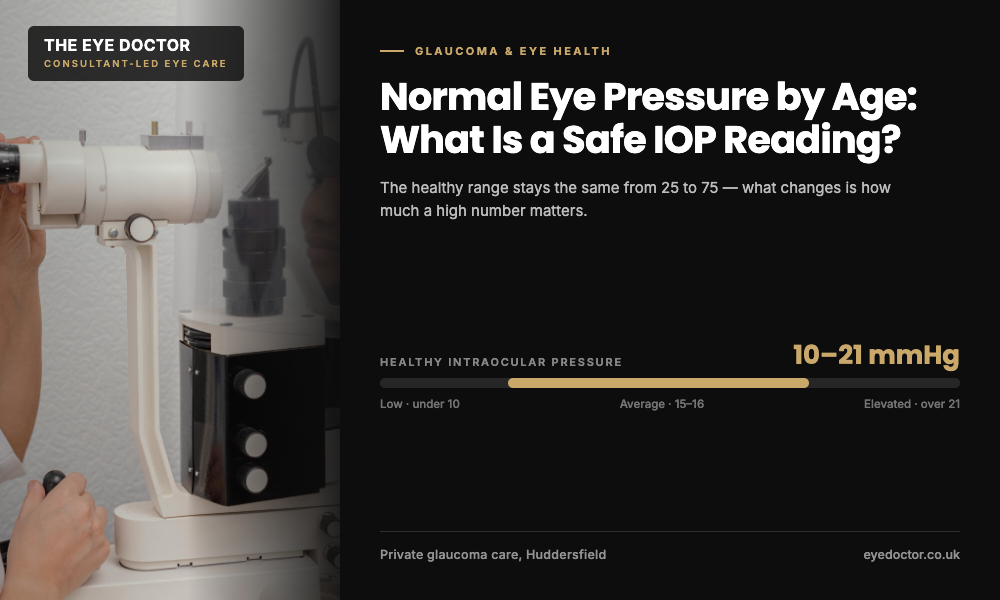
The normal eye pressure range by age is simpler than most people expect. Whether you are 25 or 75, 10 to 21 mmHg is considered healthy. Most adults measure around 15-16 mmHg.
Age matters because the optic nerve deteriorates with age, making the same pressure or strain measurement more dangerous at 70 than at 30.
Key Takeaways
- Normal eye pressure is 10 to 21 mmHg for adults of every age
- Readings often creep towards the top of that range after 40
- One high reading is not a diagnosis, as pressure rises and falls through the day
- Eye pressure checks are free on the NHS for everyone over 60
Does Eye Pressure Increase with Age?
Yes, slightly. As we age, the mesh that removes fluid from the eye gets less open, much like a sieve that gradually clogs. Because fluid has a harder time leaving the eye, pressure may build up.
Additionally, age increases other dangers. A family history of glaucoma, diabetes, short sight and long-term steroid medicines can each nudge pressure higher or leave the nerve more fragile. None of these guarantees a problem. They just mean you should pay closer attention to your numbers.
Normal Eye Pressure Range by Age: The Chart
The healthy range does not change with age. What changes is where readings tend to sit within it, and how much attention a high number deserves.
- Under 40: 10 to 21 mmHg. Readings usually settle in the low to mid teens, as the eye drains fluid well at this age.
- 40 to 60: 10 to 21 mmHg. Drainage slows so that readings can creep higher, and glaucoma risk starts to climb.
- Over 60: 10 to 21 mmHg. Readings often sit in the upper half of the range, and the optic nerve is more sensitive, so checks matter most now.
Children usually measure a little lower than adults, and their pressure rises slowly until the late teens. For anyone over 40, the pattern is clear. The safe range stays the same, but the margin for error shrinks.
What Counts as a Normal Reading?
Adults often have readings between 10 and 21 mmHg. About 15-16 mmHg is the average. UK guidelines consider anything over 21 mmHg on multiple visits elevated. The medical term for elevated intraocular pressure without nerve damage is ocular hypertension.
Raised pressure matters mainly because of its link to glaucoma, a condition that damages the optic nerve over time. Below 10 mmHg is unusual and has its own name, hypotony. It often follows eye surgery or injury, so it rarely shows up on a routine test.
One point matters more than any single number. A reading only makes full sense next to the rest of your eye health, such as the thickness of your cornea and the condition of your optic nerve. Two people can share the same number and face very different risks.

Not Sure What Your Last Eye Pressure Reading Really Meant?
A single number never tells the whole story. The Eye Doctor in Huddersfield looks at the full picture before giving you an answer.
- Pressure checks alongside OCT scans, visual field tests and corneal thickness measurements
- A clear written glaucoma report, sent straight to you and explained in plain English
Why the Same Reading Can Mean Different Things
Two reasons can make a reading seem better or worse than it is.
Corneal thickness is the first. The standard test presses on the front of the eye, so a thick cornea pushes back harder, and the machine reads high. A thin cornea does the opposite. It can hide genuinely raised pressure behind a normal-looking number. Good clinics measure corneal thickness and factor it into the result.
The second is timing. Eye pressure follows a daily rhythm and peaks in the early morning for most people. An afternoon appointment may catch you at your lowest point. Caffeine, some medicines, and even a tight collar can also temporarily shift a reading.
So one raised result is a reason to test again. It is not a reason to panic.
What Eye Pressure Is Too High?
Anything above 21 mmHg is considered elevated, and repeat readings above that level usually lead to a referral. Raised pressure alone is not glaucoma. Many people with ocular hypertension never develop nerve damage. It does increase the risk, though, so it needs proper monitoring rather than a shrug.
A sudden spike is different. If pressure climbs quickly, it can cause severe eye pain, a red eye, blurred vision, halos around lights, and nausea. Acute angle-closure is a medical emergency that requires immediate treatment.
Told Your Pressure Is High and Worried About What Comes Next?
High pressure does not always mean eye drops for life. The Eye Doctor starts with the least treatment needed for a good result, then builds from there.
- Many people choose SLT laser and skip the daily drops
- If surgery is needed, the team does trabeculectomy and drainage implants too
- You deal with the surgeon, not an intermediary, during the three months of aftercare
Can You Have Glaucoma with Normal Eye Pressure?
Yes. It is called normal tension glaucoma, and it causes nerve damage even when readings stay inside the normal range. It is one of the main reasons a pressure test alone can never rule out glaucoma.
That is also why the early signs of glaucoma are so easy to miss. The condition takes side vision first, slowly and without pain, and pressure may look fine the whole time. Nerve scans and visual field tests pick up what the pressure test cannot.
How Often Should You Have Your Eye Pressure Checked?
Most adults should have a full eye test every two years. From 40 onwards, yearly checks make sense if a close relative has glaucoma. Your optometrist will tell you if you need more frequent visits.
Cost should never be the barrier. NHS sight tests are free once you turn 60. They are also free from age 40 if your mother, father, brother, sister or child has glaucoma, and at any age if an eye specialist says you are at risk. People with diabetes qualify as well. So if your last test was more than two years ago, the next one may cost you nothing at all.
Conclusion
Normal ocular pressure varies very little with ageing. From your twenties to your eighties, it ranges from 10 to 21 mmHg. Context is what shifts. Age can raise readings, the optic nerve becomes more fragile, and a higher number matters more. It all becomes ordinary when checked regularly.
If a recent reading has raised questions, or you're due for a proper check, The Eye Doctor provides private glaucoma treatment in Huddersfield with full diagnostic reports and honest advice on what your numbers really mean.
Frequently Asked Questions
What is a normal eye pressure for a 70-year-old?
10 to 21 mmHg, similar to an adult. At 70, readings often sit in the upper half of that range, so a yearly check is a sensible habit. At this age, the NHS offers free sight exams.
Is an eye pressure of 22 high?
It sits just above the normal cutoff. One reading of 22 is not a diagnosis. An optometrist will repeat the test on another day and check your corneal thickness before deciding whether a referral is needed.
What time of day is eye pressure highest?
Early morning for most people. Pressure then eases through the day. Rather than judging from a single reading, clinics sometimes take measurements at several points in the day to see the full pattern.
Can stress raise eye pressure?
Yes, for a short time. Stress can nudge the number up, but it settles again. What matters over the years is your age, your family history and your general health, not one bad week.
Are eye pressure tests free in the UK?
The check is part of a standard sight test. That test is free on the NHS for over 60s, for over 40s with a parent, sibling or child who has glaucoma, for people with diabetes, and for several other groups.