
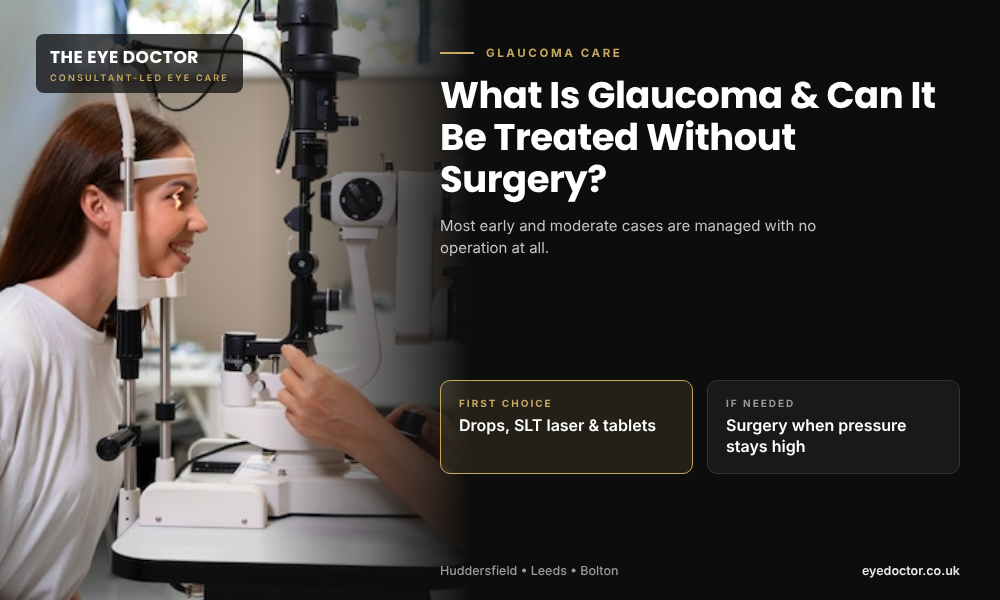
Glaucoma is a serious eye condition that damages the optic nerve. When people hear this diagnosis, they often fear operations. However, today, doctors can successfully treat this condition without surgery. Most patients use special prescription eye drops and SLT laser therapies to reduce their eye pressure. These simple treatments help preserve your sight for the future.
Moreover, one must also ensure maintaining a healthy lifestyle with healthy food habits to prevent it from worsening. Natural products such as caffeine, saffron, and bilberry fruit can also help lower IOP. While glaucoma cannot be treated completely, its effect can be slowed down and prevented from getting severe. Modern medicine offers many effective ways to protect your clear vision. This guide explains how.
What Is Glaucoma?
Glaucoma is a group of eye conditions that permanently damage the optic nerve, which is essential for clear vision. The most common cause is high fluid pressure within the eyeball. The human eye produces a clear, healthy fluid to nourish the insides. The eye must drain this fluid at the exact same rate it produces it through a tiny drainage angle.
However, sometimes the rate slows or becomes completely blocked, leading to fluid buildup. The pressure it causes is called intraocular pressure, which pushes hard against the optic nerve, crushing the nerve fibres. If these die, you lose your vision forever.
What Are The Early Symptoms Of Glaucoma?
Doctors often call this disease the silent thief of sight. Early symptoms are rare, slowly stealing your sight. Timely diagnosis and daily management are vital to prevent irreversible blindness
- In the early stages, you will feel no pain at all.
- You will not notice any vision changes at first.
- Over time, you begin to lose your side vision.
- You might develop blind spots in your peripheral view.
- Because it hides so well, regular eye exams are vital to catch it early.
Sometimes, the drainage angle closes completely and very suddenly. Doctors call this acute angle-closure glaucoma. This is a severe medical emergency. Symptoms of an acute attack include:
- Suddenly, severe eye pain or a terrible headache.
- Red or bloodshot eyes.
- Feeling sick to your stomach or vomiting.
- Seeing rainbow-coloured halos around bright lights.
- Sudden blurred vision.
If you experience these signs, you must visit a good clinic straightaway.

Protect Your Sight From Hidden Damage
Detect pressure changes early. Get expert advice from top eye specialists. Preserve your clear vision for the future.
Book a ConsultationWho is at High Risk For Glaucoma?
Anyone can develop this eye condition. However, certain factors significantly increase your risk.
- Age is a major factor. People over 40 years old face a much higher risk.
- Genetics matter. If your parents or siblings have the disease, you have a higher chance of getting it.
- People with diabetes or high blood pressure must take extra care.
- Individuals who are very nearsighted or farsighted face greater risks.
- Thin corneas make you more likely to suffer nerve damage.
- If you take steroid eye drops or tablets for a long time, your risk goes up.
- People of African, Hispanic, or Asian descent have a much higher risk.
If you have these risk factors, you must schedule regular eye exams. Early checks are the best defence.
Can Glaucoma Be Treated Without Surgery?
Yes, medical experts treat most early and moderate cases without surgery. The main goal of any treatment is to lower the pressure inside your eye. This action protects the optic nerve from further damage. While treatments cannot reverse vision you have already lost, they can stop things from getting worse. Eye specialists use several excellent non-surgical options, such as:
Prescription Eye Drops
Special eye drops are the most common, applied every single day exactly as prescribed by the doctor. Some drops reduce the amount of fluid your eye makes. Other drops help the fluid drain more effectively from your eye. Common types include prostaglandin analogues and beta-blockers. Prostaglandins help increase fluid outflow. Beta-blockers reduce fluid production. These drops are highly effective if you never skip a dose.
Laser Therapy Treatments
Laser procedures are provided by many clinics. They are fast, safe, and require very little recovery time. Doctors use Selective Laser Trabeculoplasty (SLT) for open-angle cases. The expert uses a tiny laser beam to open up the eye's blocked drainage tubes. This helps fluid flow out properly and lowers the pressure safely. For angle-closure cases, doctors use a Laser Peripheral Iridotomy (LPI). This creates a tiny hole in the iris to let fluid escape. Laser therapy can often reduce your need for daily eye drops.
Oral Medications
Sometimes, prescription eye drops do not lower the pressure enough. In these specific cases, an eye specialist might prescribe oral tablets. These pills belong to a medical group called carbonic anhydrase inhibitors. They work quickly to decrease the fluid production in your eye. Doctors usually prescribe these tablets for short-term control or to support your daily eye drops. They are a powerful tool to manage eye pressure without traditional surgery.
Get the Most Effective Glaucoma Non-Surgical Options
Advanced laser therapies. Discuss custom eye drop plans. Seek aftercare expert advice.
Request a Call BackCan You Control Glaucoma Naturally? Helpful Tips
Natural choices cannot cure the disease on their own. However, they provide excellent support for your overall eye health. Here are some ways to support your eye health naturally.
Eat A Diet Rich In Leafy Greens
High levels of nitrates and vitamins in dark leafy greens help regulate blood flow. These also support the pathways that manage eye pressure. A healthy diet gives your optic nerve the daily support it needs to stay strong.
Ginkgo Biloba Extract
Ginkgo biloba comes from the leaves of the tree and possesses powerful antioxidant properties. Some studies suggest it helps improve blood flow to the optic nerve and protects the delicate nerve cells. While not a complete cure, many patients use it safely alongside their daily eye drops.
Moderate Exercise
Try doing safe exercises regularly to help lower eye pressure and improve your overall blood circulation. You must avoid activities that put your head in a downward position, such as certain yoga poses, because they can increase pressure. Gentle walking or light jogging is perfect to keep your eyes healthy.
Manage Your Caffeine Intake
Drinking large amounts of caffeine in a short time can temporarily raise the pressure inside your eye. You do not have to stop drinking coffee completely, but you should limit how much you drink at once. Spread your drinks out to keep your eye pressure stable throughout the day.
Increase Omega-3 Fatty Acids
The Omega-3 fatty acids significantly reduce inflammation and protect the health of the retina. You can find them in fresh fish or high-quality dietary supplements. A balanced intake helps protect the delicate nerve cells from long-term structural damage.
When Do You Need Glaucoma Surgery?
Sometimes drops and laser therapies fail to lower the pressure. If your vision continues to decline, experts will recommend surgery to save your sight. These can be:
- Trabeculectomy: The surgeon creates a tiny flap in the white part of your eye. This creates a new channel to allow excess fluid to drain safely.
- Deep Sclerectomy: This is a very safe procedure that removes a small amount of tissue to help fluid drain more effectively. It uses a tiny stent to keep the drain open.
- Drainage Tubes: The expert places a tiny tube into the eye to drain fluid into a small collection area.
Conclusion
Glaucoma is a serious eye condition in which the optic nerve is damaged, threatening your sight. However, you do not always need an operation. Now get successful treatment without surgery using advanced prescription eye drops, oral tablets, and various laser therapies. These methods provide the best results when experts detect the disease early. Without proper treatment, this condition causes permanent blindness. Regular eye tests are the best place to start.
Get effective Glaucoma Treatment in Huddersfield, whether you are looking for surgical or non-surgical options. The expert practitioners at The Eye Doctor offer the best support to help lower your eye pressure and ensure long-term eye health.
Frequently Asked Questions (FAQs)
1. Is glaucoma 100% curable?
Unfortunately, a complete cure does not exist yet. The damage to the optic nerve is permanent. However, experts can control it perfectly with daily drops and regular check-ups to prevent further vision loss.
2. What is the first stage of glaucoma?
The first stage rarely presents any warning signs. Fluid pressure starts to build up slowly inside the eye. You will not feel pain or notice any blurry vision at this early stage.
3. How can I treat glaucoma without surgery?
Absolutely. You will be prescribed daily eye drops to reduce fluid in your eye. They can also perform quick laser therapy, such as SLT, to safely open blocked drainage channels.
4. Can I live 50 years with glaucoma?
Yes. You can live a full, normal life. With early detection, daily eye drops, and proper care, most patients preserve their clear vision throughout their lives.